
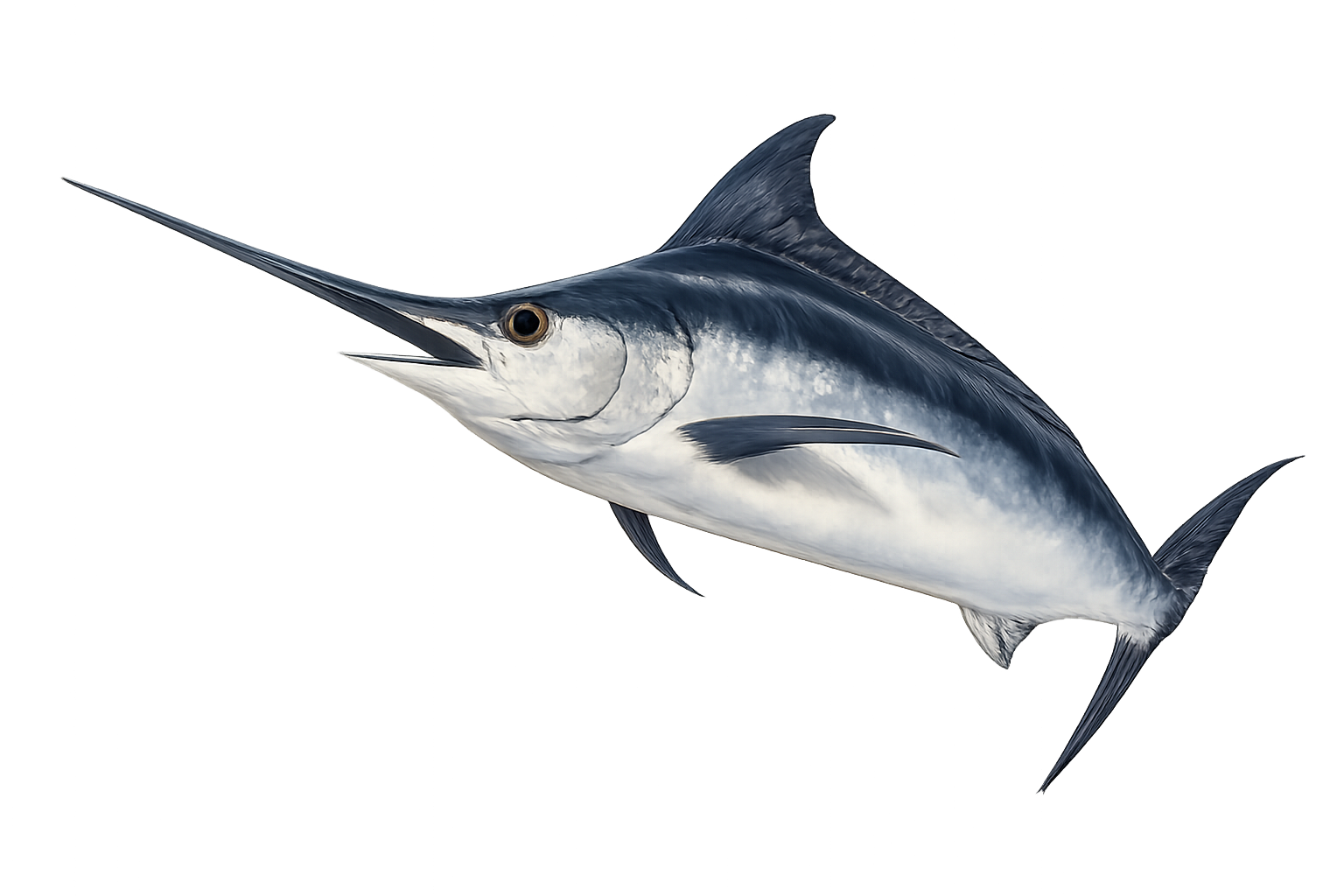
Xiphias gladius · Swordfish
Into the deep.
Below the sunlit surface, a hunter searches. How does it see in a world growing colder and darker?
Begin the descentOne species. A different way of seeing.
10–15 min6 chapters
An illustrated journey, not a tracked animal
An English-language pilot
01A shadow in the darkness
Less light. More questions.
A swordfish moves through the water column in search of food. Fish and squid are on the menu.
Our illustrated journey follows it away from the sunlit surface. In colder, dimmer water, finding moving prey presents a challenge.
Based on NOAA Fisheries [1]
- Sunlit surface
- Fading light
- Dark water
Optional observation
Explore the clues
Very little light
A good clue. With less light available, spotting prey becomes challenging. Keep an eye on how this hunter makes the most of its vision.
Cold water
A good clue. Temperature affects how an eye responds. The swordfish has a special way to keep its eyes working in colder water.
Finding prey
A good clue. This hunter searches for fish and squid. Detecting a quick movement can help it find a meal.
The next clue is hiding in plain sight.
02The secret behind its eyes
Cold water. Warmer eyes.
Look closely at the eye. The swordfish carries a little warmth into the cold.
Warmth where it matters
Specialised tissue, developed from an eye muscle, produces heat that warms the eyes and brain.
Research shows that a warmer retina — the light-sensitive layer inside the eye — can detect faster changes in a moving scene. That helps explain how this predator can hunt in cold water.
This warming is local: it does not keep the whole body at a constant warm temperature.
A closer look at the science
The study measured the response of swordfish retinas at different temperatures. The highlight here only points to a region of the head; it does not show measured heat, tissue boundaries or what an individual fish sees.
Based on NOAA Fisheries [1]K. A. Fritsches, R. W. Brill and E. J. Warrant [2]
03A hunter, a bill, a clue
Made to move. Built to hunt.
The eye is only part of the story. What might the swordfish find in the water around it?
Choose a prey-group clue
Explore either clue. Both belong in the wider story.
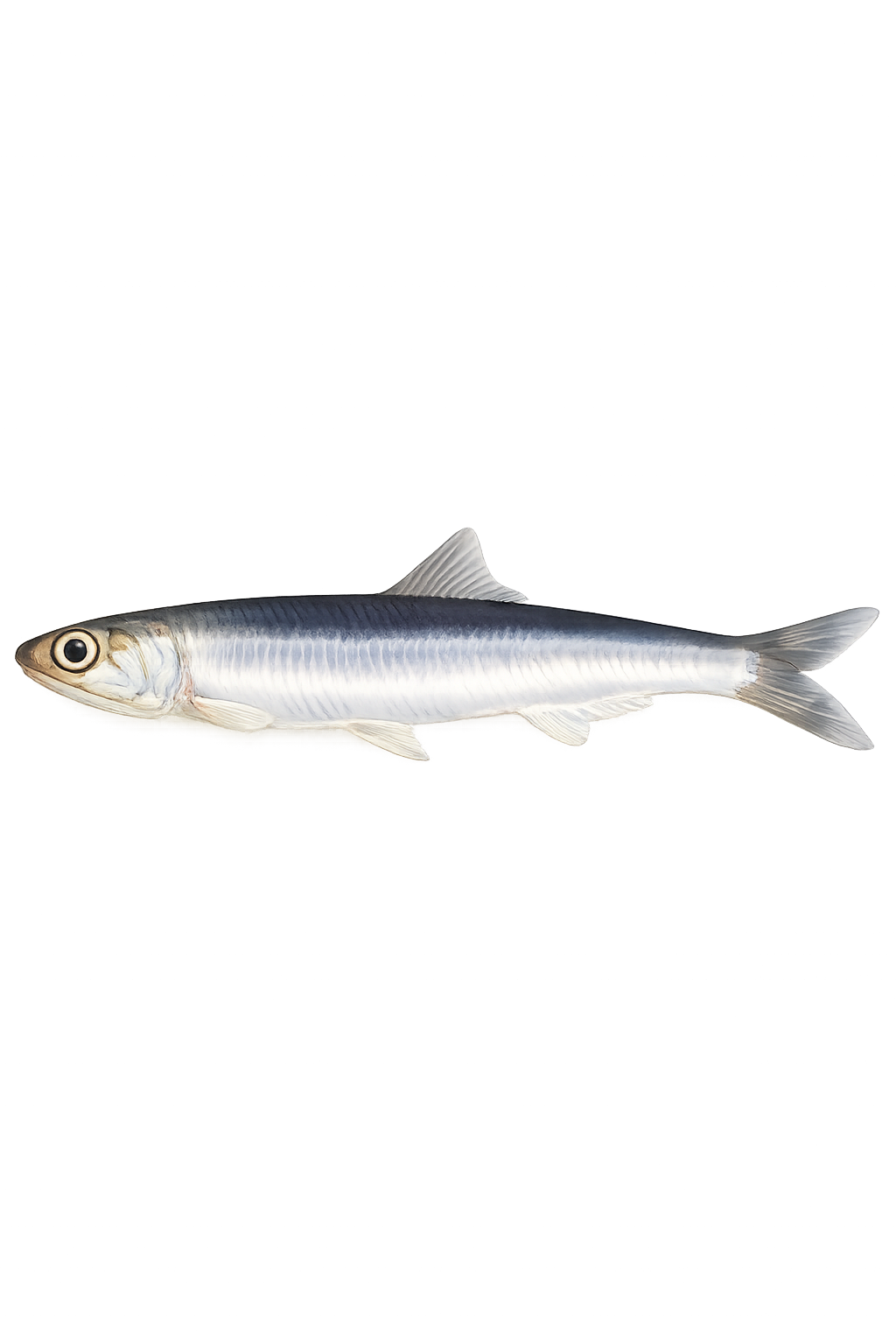 Fish
European anchovy is recorded as swordfish prey in the Mediterranean catalogue. The illustration identifies the species; it does not depict an observed hunt.
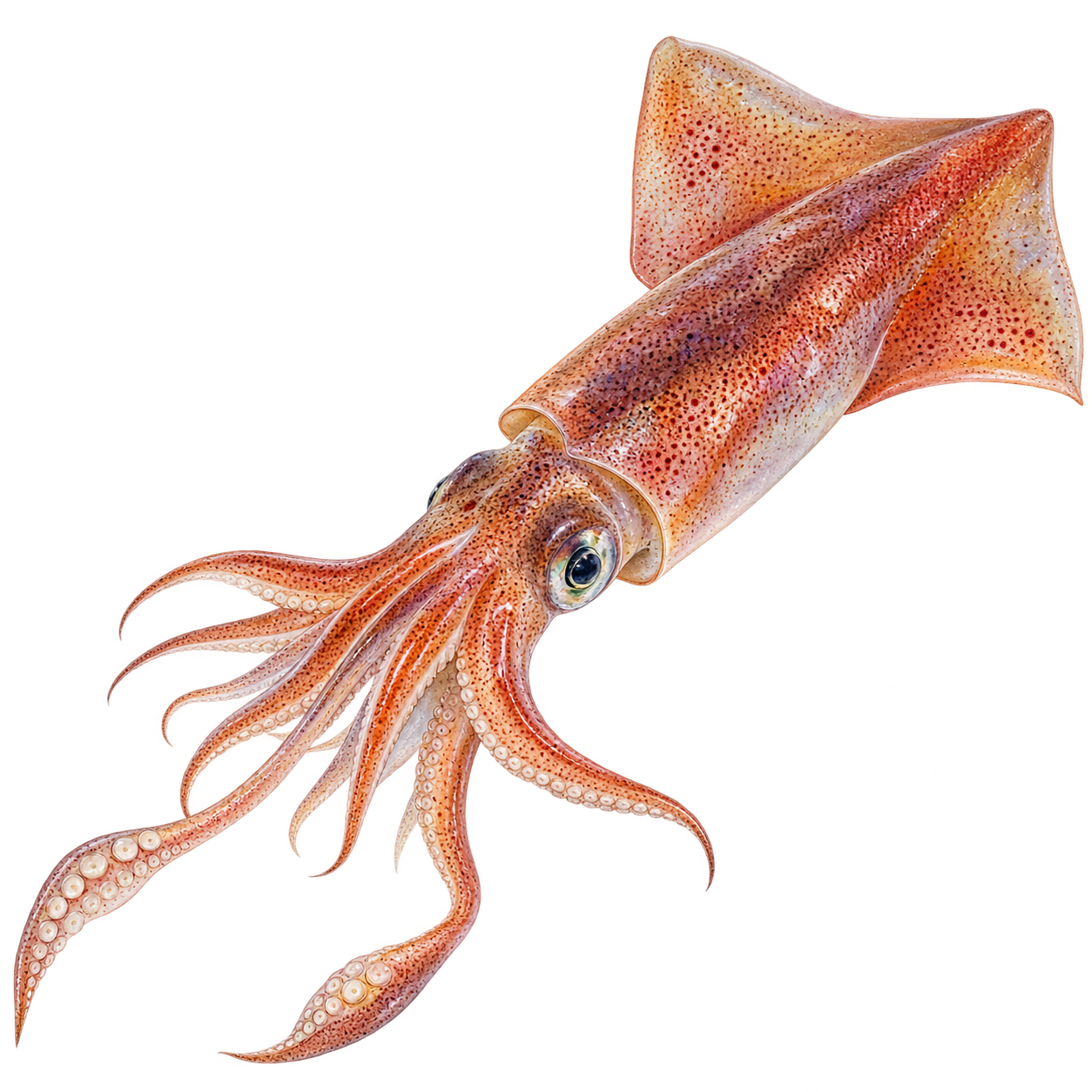 Squid
Loligo vulgaris is recorded as swordfish prey in the Mediterranean food web below. The illustration identifies the species; it does not depict an observed hunt.
The bill in action
Swordfish can slash the bill from side to side, stunning or injuring prey before taking it.
Illustrative prey groups and motion · no measured encounter, speed or scale.
Based on NOAA Fisheries [1]ICES [10]
But where did the energy in that meal begin?
04From one pathway to connected seas
One hunter. A web of connections.
Start with a producer and follow energy and matter through the food web to swordfish. Then unfold the Mediterranean web and compare evidence-backed connections in the Sargasso Sea.
01 / Follow energy and matter
Start with a producer.
Bacteriastrum furcatum is eaten by a copepod, which is eaten by an anchovy. The anchovy can be eaten by swordfish. Follow energy and matter from the producer through these consumers.
SwordfishXiphias gladiusEuropean anchovyEngraulis encrasicolus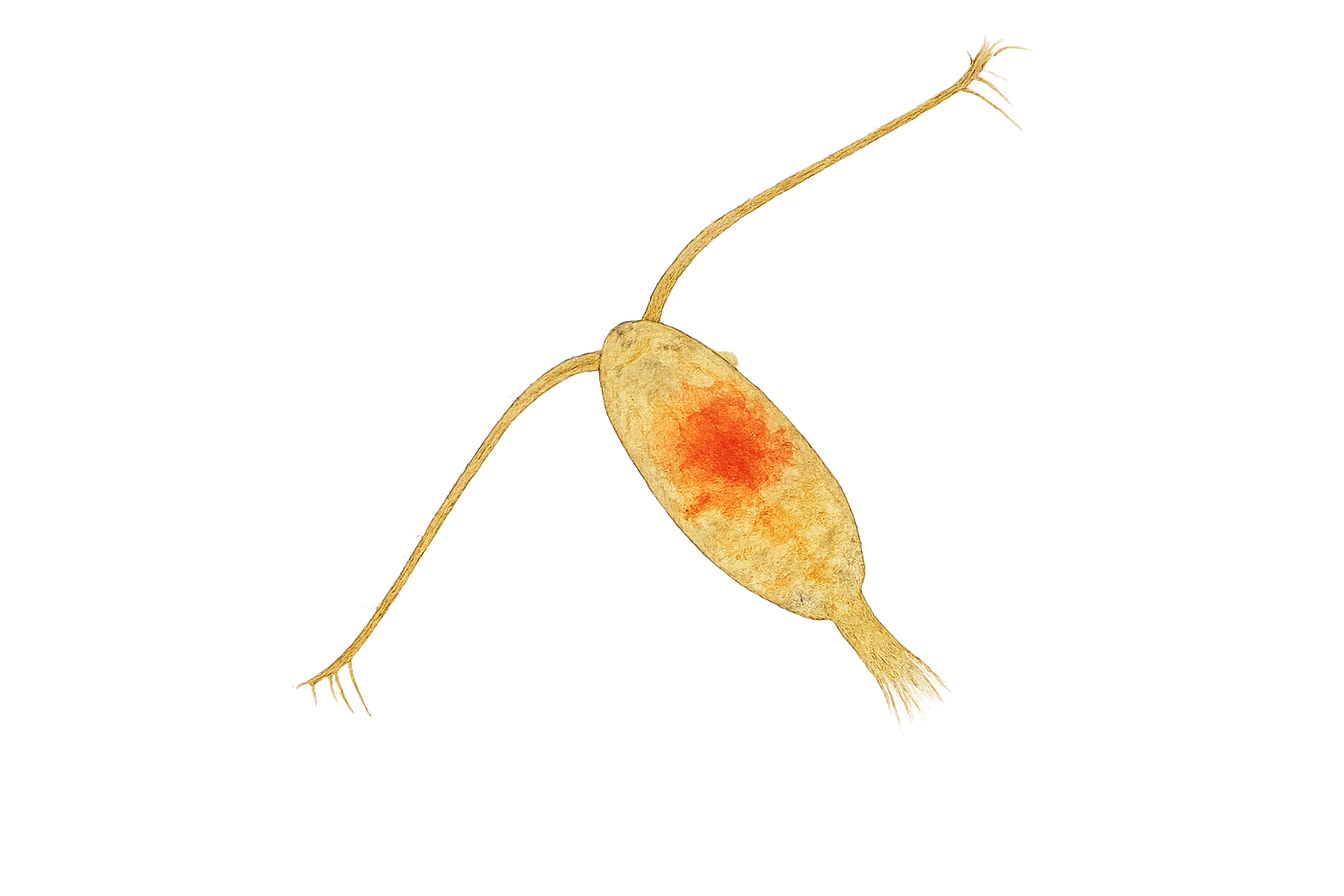 CopepodParacalanus parvus
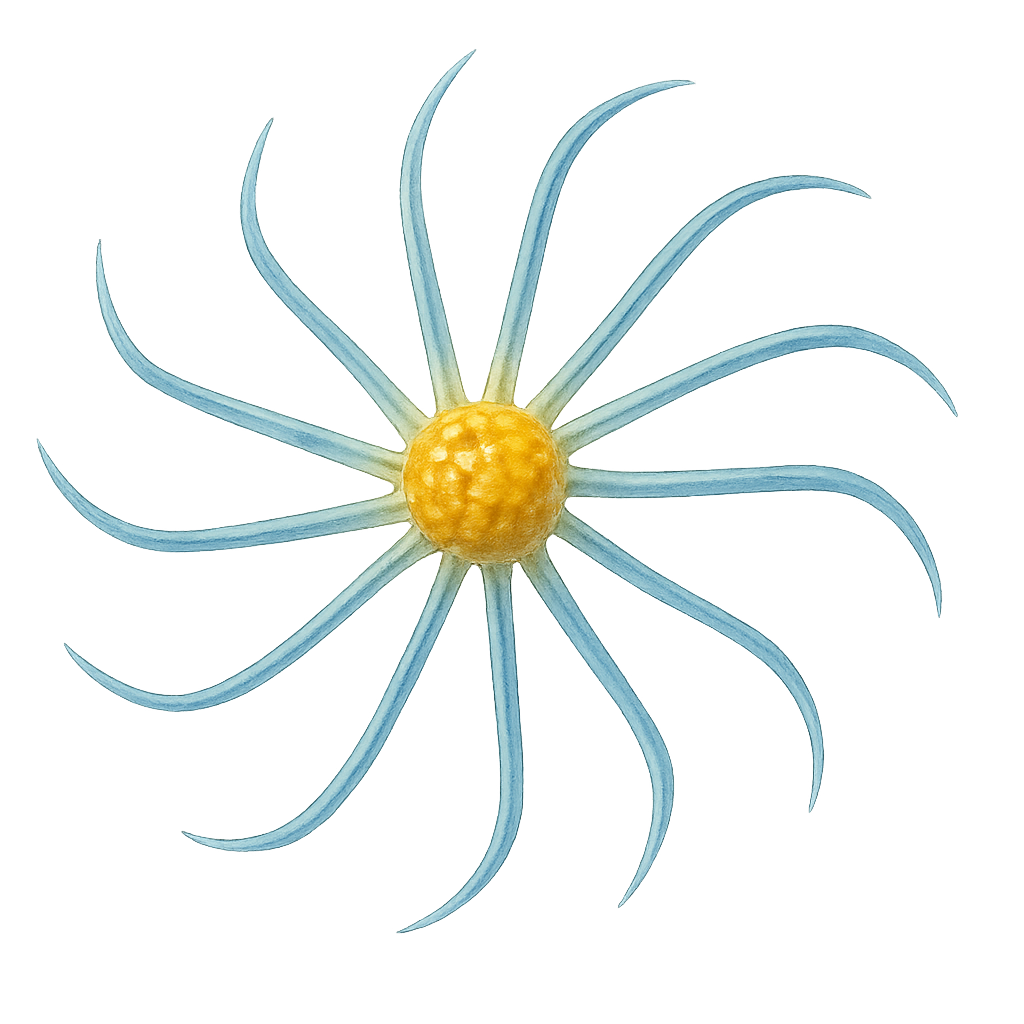 Forked diatomBacteriastrum furcatum
Sunlight supplies energy to the producers at the base
One recorded Mediterranean pathway. Arrows show energy and matter moving from food to consumer; sunlight supplies energy to the producer.
Connections and their sources
- Bacteriastrum furcatum → Paracalanus parvusEvidence 1
- Paracalanus parvus → Engraulis encrasicolusEvidence 1
- Engraulis encrasicolus → Xiphias gladiusEvidence 1
One route is only the beginning. What happens when another producer and a squid enter the picture?
02 / Let the connections unfold
A chain becomes a web.
Swordfish feeds on anchovy and squid. Squid also eats anchovy; anchovy eats the copepod, which feeds on both producers. Select a species to follow its recorded feeding connections.
SwordfishXiphias gladiusEuropean SquidLoligo vulgarisEuropean anchovyEngraulis encrasicolusCopepodParacalanus parvusForked diatomBacteriastrum furcatum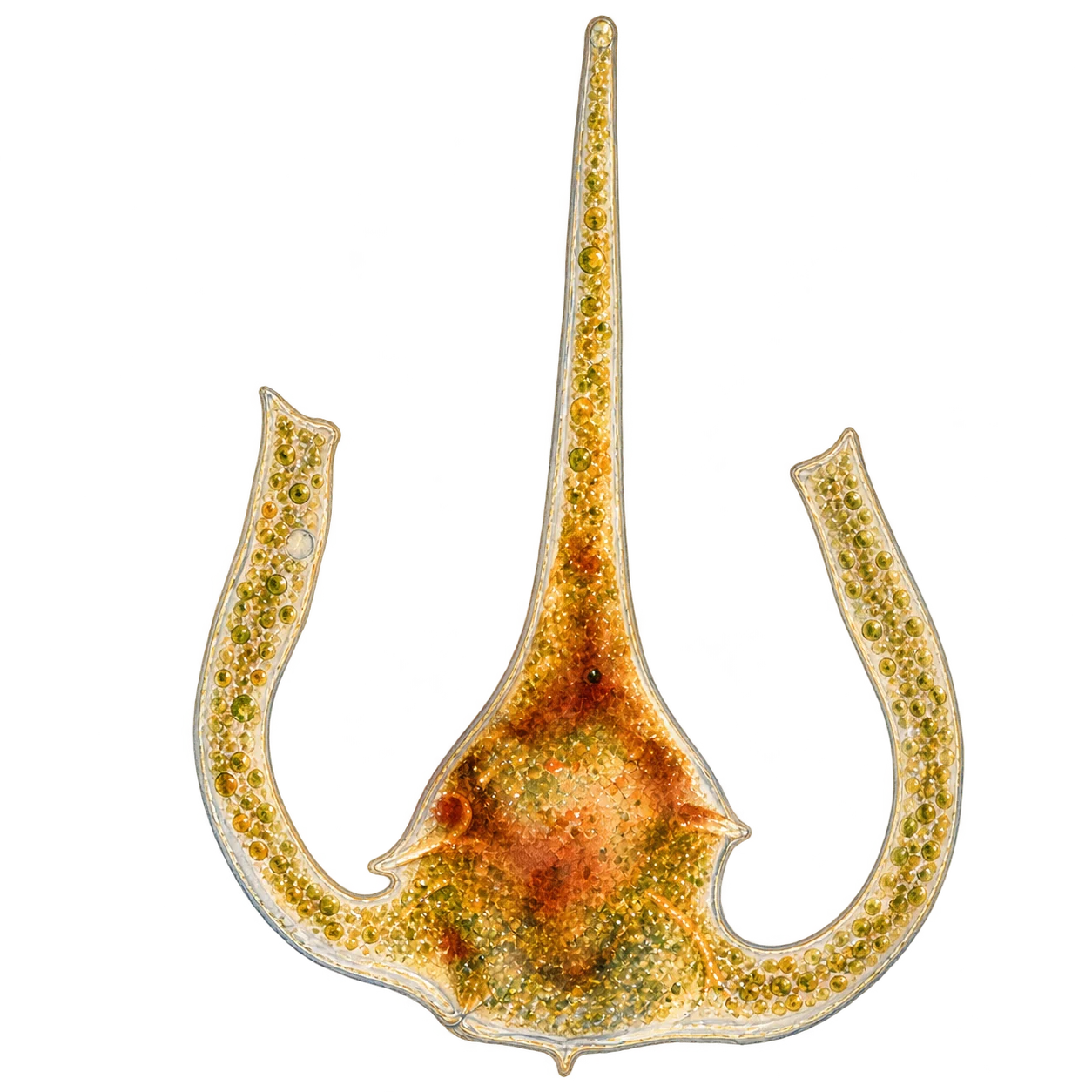 Tripos platycornis
Sunlight supplies energy to the producers at the base
A regional catalogue model of six species and six feeding links. Arrows show energy and matter flowing from food to consumer. Illustrations are not to scale; the arrangement does not measure biomass.
Connections and their sources
- Bacteriastrum furcatum → Paracalanus parvusEvidence 1
- Paracalanus parvus → Engraulis encrasicolusEvidence 1
- Engraulis encrasicolus → Xiphias gladiusEvidence 1
- Tripos platycornis → Paracalanus parvusEvidence 1Evidence 2
- Engraulis encrasicolus → Loligo vulgarisEvidence 1
- Loligo vulgaris → Xiphias gladiusEvidence 1Evidence 2
The same swordfish species also appears in another regional catalogue. Let’s widen the view.
03 / A wider ocean
One predator. Two seas.
Compare energy and matter pathways to swordfish in two seas, with wider Atlantic evidence linking filefish, dolphinfish and floating Sargassum habitat.
The Sargasso review records dolphinfish as swordfish prey, particularly juveniles. Filefish → dolphinfish adds wider North Atlantic feeding evidence; Sargassum → filefish shows Caribbean habitat evidence. Each connection has its own source below.
Adult dolphinfish can eat very young swordfish: a Tyrrhenian Sea study identified post-larval swordfish as prey. The opposite arrows between these species describe different life stages and individuals.
SwordfishXiphias gladiusEuropean SquidLoligo vulgarisEuropean anchovyEngraulis encrasicolusCopepodParacalanus parvusForked diatomBacteriastrum furcatumTripos platycornis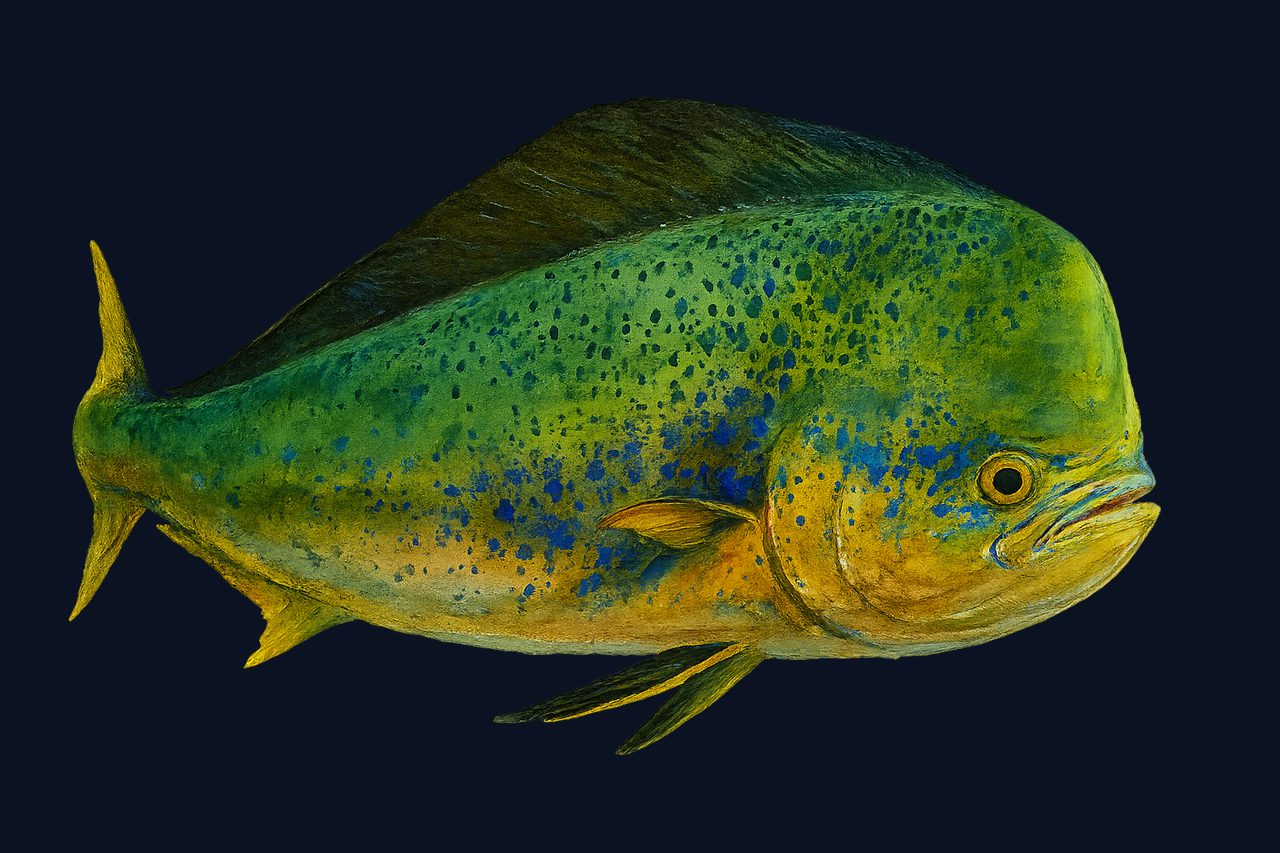 Coryphaena hippurus
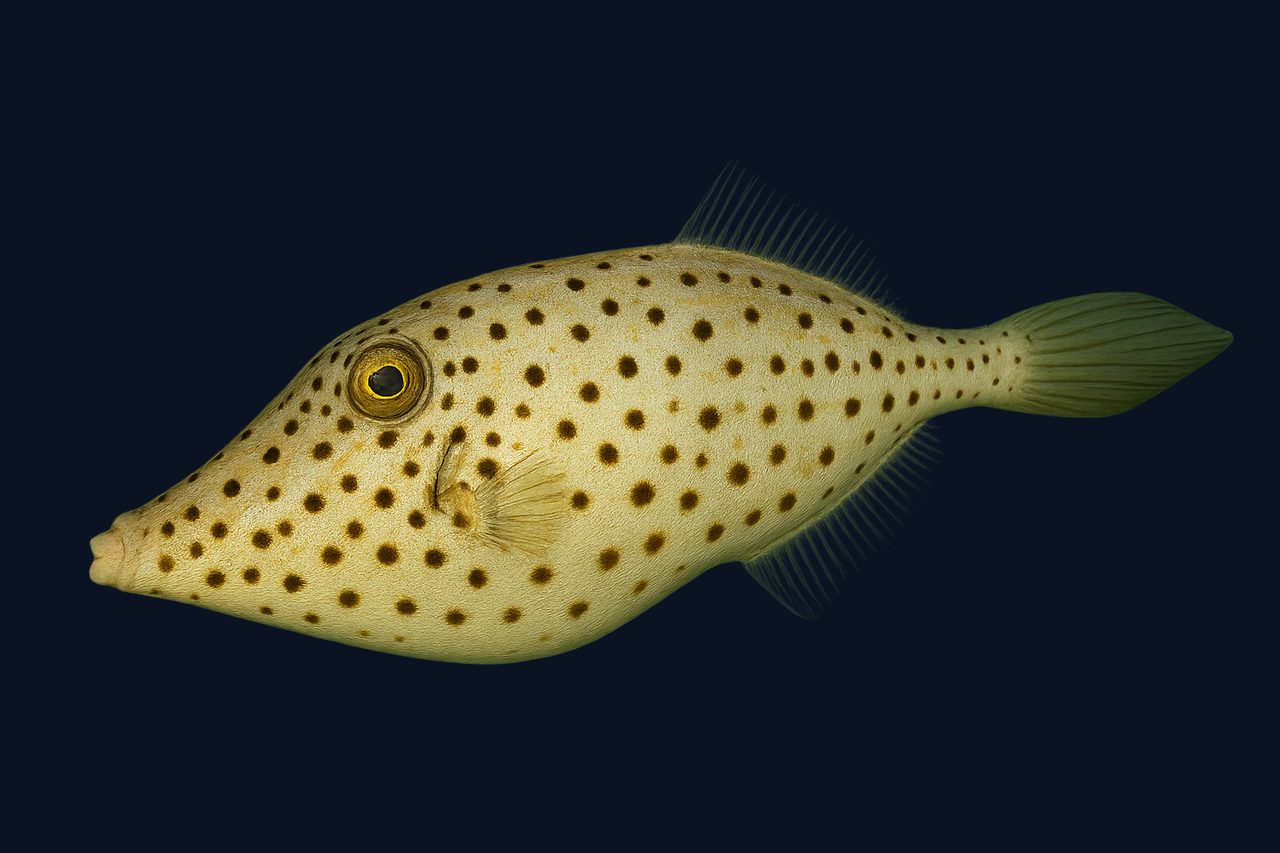 Aluterus scriptus
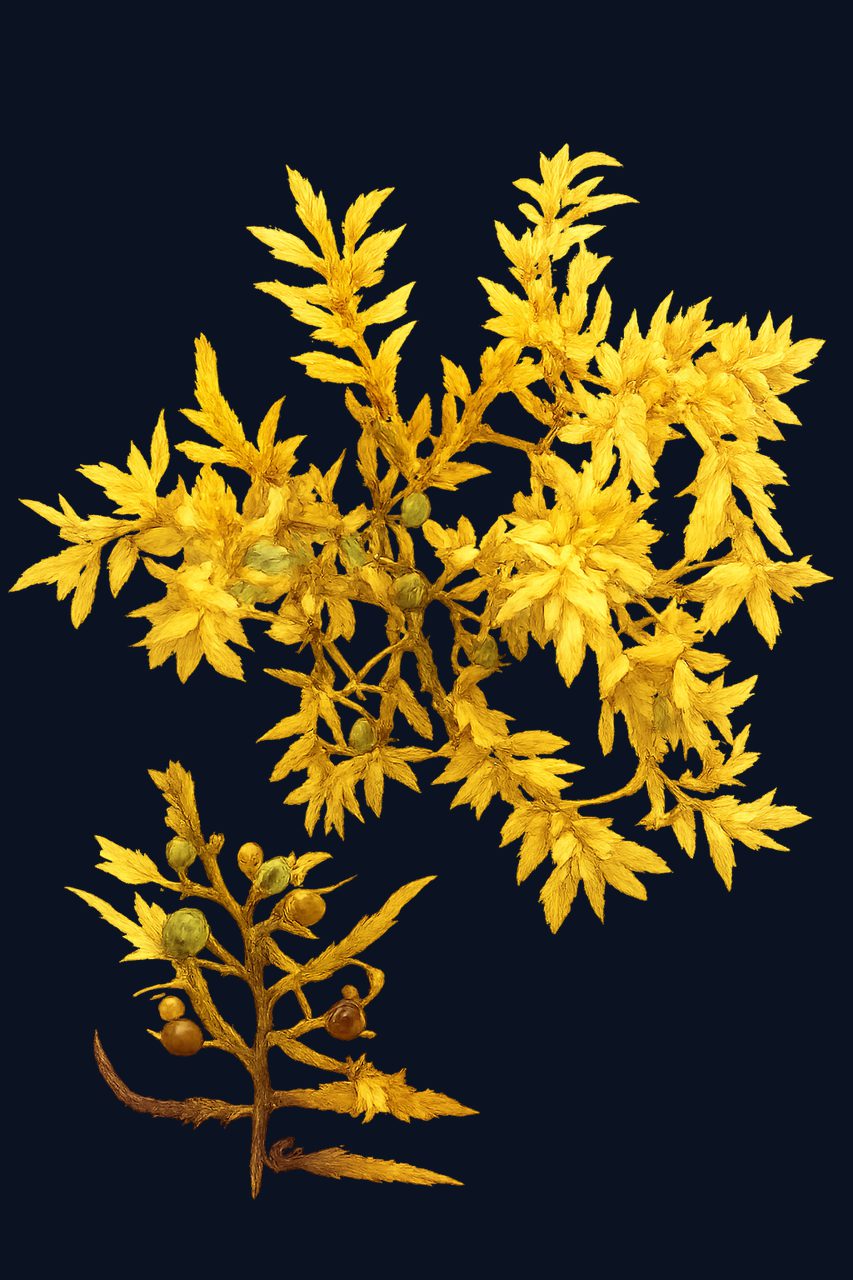 Sargassum natans
Feeding arrows show energy and matter flowing from food to consumer. Sargassum → filefish indicates habitat provision. Habitat evidence concerns the genus Sargassum; the artwork shows S. natans. Illustrations do not represent a recorded encounter, size or life stage.
European squid → dolphinfish is documented in the Bay of Medulin, Adriatic Sea. This connection is shown in the combined comparison.
A shared species connects the regional views. This is not a migration track or the journey of one animal.
Connections and their sources
- Bacteriastrum furcatum → Paracalanus parvusEvidence 1
- Paracalanus parvus → Engraulis encrasicolusEvidence 1
- Engraulis encrasicolus → Xiphias gladiusEvidence 1
- Tripos platycornis → Paracalanus parvusEvidence 1Evidence 2
- Engraulis encrasicolus → Loligo vulgarisEvidence 1
- Loligo vulgaris → Xiphias gladiusEvidence 1Evidence 2
- Coryphaena hippurus → Xiphias gladius
The regional review particularly identifies juvenile dolphinfish as prey. Illustrations represent species, not a recorded encounter or life stage.
Evidence 1
Additional diet and habitat evidence
- Aluterus scriptus → Coryphaena hippurusEnergy and matter transfer · wider North Atlantic diet record
Rudershausen and colleagues (2010), Table A.5, found scrawled filefish in dolphinfish stomach contents from the North Carolina fishery, mainly the Gulf Stream. This wider North Atlantic record is not a direct Sargasso Sea feeding observation.
Evidence 1 - Sargassum natans → Aluterus scriptusProvides floating habitat for juvenile filefish
Moritz (2015), p. 144, observed juvenile scrawled filefish immediately below floating Sargassum at Punta Cana in the Caribbean. The seaweed was identified to genus; S. natans is pictured here as an example. This connection describes habitat use, not a feeding record.
Evidence 1 - Loligo vulgaris → Coryphaena hippurusEuropean squid → dolphinfish · energy and matter
Iveša and colleagues (2021), section 4, record European squid as prey of dolphinfish in the Bay of Medulin, northern Adriatic Sea. The combined view shows this species-level diet connection; it is not a Sargasso Sea feeding record.
Evidence 1 - Xiphias gladius → Coryphaena hippurusYoung swordfish → adult dolphinfish · energy and matter
Poisson (2024) identified two post-larval, young-of-the-year swordfish in the stomach of an adult male dolphinfish from the northern Tyrrhenian Sea. This Mediterranean record concerns very young swordfish. The opposite arrows represent different life stages and individuals; the species illustrations do not depict the prey’s age or size.
Evidence 1
These regional records open onto a much wider ocean. The next chapter places swordfish on the globe.
Based on NOAA National Ocean Service [3]NOAA Education [4]Al-Hanoun & Mayya [7]Tudela & Palomera [8]Fernández-Corredor et al. [9]ICES [10]Brian E. Luckhurst [11]Rudershausen, Buckel, Edwards, Gannon, Butler & Averett [12]Timo Moritz [13]Iveša, Piria, Gelli, Trnski, Špelić, Radočaj, Kljak, Jug-Dujaković & Gavrilović [14]François Poisson [15]
05An ocean without borders
A wide world. Connected waters.
Swordfish occur across tropical and temperate waters of the Atlantic, Indian and Pacific oceans. The distribution layer gives us a broad view of that world.
- World view
- The global layer places the species in a broad ocean setting. A distribution map does not tell us where a particular swordfish travelled.
- Atlantic Ocean
- Inspect the Atlantic part of the distribution. North Atlantic swordfish make seasonal movements between warmer spawning areas and cooler feeding areas; this layer does not plot those movements.
- Indian Ocean
- Inspect the Indian Ocean part of the same distribution dataset. The map shows the layer’s geographic coverage, not a uniform population or a fishery stock boundary.
- Pacific Ocean
- Inspect the eastern Pacific in this zoom, or use the world view for both sides of the Pacific. No tracking points are shown.
The existing map opens with a return link to this chapter.
© FAO, 2025. Aquatic Species Distribution Maps. Xiphias gladius (Swordfish). CC BY 4.0. Layer accessed by Blue Biome on 29 March 2026.
FAO’s map presentation does not imply an opinion on the legal status of territories or the delimitation of boundaries.
Based on FAO [5]NOAA Fisheries [1]
How can we explore those dependencies through play?
06From living system to game system
Support the web. Then the hunter.
Blue Biome turns ecological dependencies into a game. Try a prepared Mediterranean Sea position using the existing build rules.
Swordfish · tertiary consumer
- Temperature
- 2
- Light
- 1
- Oxygen
- 2
- Nutrients
- 3
These are game-token costs, not measured temperatures, light levels or physiological needs. Light connects to the hunter indirectly through primary production and food webs.
Your prepared position
The primary producer and primary consumer are already built. Drawing and harvesting are complete, and you hold enough resources for the two remaining builds. Which species comes next?
- PPPrimary producerBacteriastrum furcatum
- C1Primary consumerParacalanus parvus
- C2Secondary consumerEngraulis encrasicolus
- C3Tertiary consumerXiphias gladius
This region’s canonical anchovy is Engraulis encrasicolus. The Engraulis mordax artwork used earlier is not substituted into the game data.
In this position, build the secondary consumer (European anchovy), then the tertiary consumer (swordfish). The interactive challenge applies the same game engine used by solo play.
Continue in the solo gameBased on Blue Biome [6]
Six chapters. One living system.
The mystery, revealed
An eye adaptation opened the mystery. Hunting led us to food webs, sunlight, geography and human choices. The swordfish is part of a living system whose connections reach far beyond one animal.
Take a moment
Which connection changed the way you think about the swordfish?
You have reached the end of the six-chapter pilot. Revisit a discovery or continue through Blue Biome’s existing tools.
For curious minds & educators
What this pilot explores
- Describe how regional heating supports swordfish vision in cold water.
- Connect an adaptation with an environmental challenge, without confusing regional heating with whole-body warmth.
- Trace an indirect connection from sunlight through primary production and feeding relationships to a predator.
- Read a recorded regional food web, compare alternative energy pathways and distinguish catalogue relationships from a geographic layer or a game abstraction.
Observe → explore → discuss → reflect
Ask learners to choose a hunting challenge, reveal the adaptation, then explain the connection in their own words. Compare the illustration with the cited research: what does each show, and what does each leave out?
A Blue Biome teaching suggestion connected to Ocean Literacy principles 1, 5 and 6; this is not a grade-specific NMEA curriculum guide.
Science & sources
- North Atlantic swordfish
Supports broad prey categories, bill-assisted hunting, regional heating and broad occurrence/movement context. No stock-status claim is made.
- Warm eyes provide superior vision in swordfishes
Supports local warming of the eyes and brain and improved detection of rapid motion. The visual is an educational illustration.
- What are phytoplankton?
Supports sunlight and nutrient requirements and the role of phytoplankton as primary producers.
- Aquatic food webs
Supports energy flow from food to consumer and the distinction between a pathway and a branching web. Species-specific links use the separate references below.
- FAO aquatic species distribution map of Xiphias gladius
Existing Blue Biome raster and metadata retain the FAO geographic source, projection, licence and attribution. Coverage is not animal telemetry or abundance.
- Blue Biome gameplay rules and regional species costs
Canonical regional species and gameplay rules supply costs and build order. The optional challenge runs the existing engine, including regional bonuses and completion rewards.
- Feeding of Paracalanus parvus in the coastal waters of Baniyas (Eastern Mediterranean)
The gut-content study lists both producer taxa as copepod food. Tripos platycornis appears under its older name Ceratium platycorne.
- Trophic ecology of the European anchovy in the Catalan Sea
Supports the recorded copepod-to-European-anchovy feeding link in the Catalan Sea.
- Assessing juvenile swordfish diet in the northwestern Mediterranean Sea
Supports European anchovy as juvenile swordfish prey in the northwestern Mediterranean.
- Cephalopod biology and fisheries in Europe: Loligo vulgaris species account
The ICES account lists anchovy among squid prey and swordfish among squid predators. It compiles several regions; the story combines catalogue links rather than reconstructing one local encounter.
- A preliminary pelagic food web of the Sargasso Sea
Regional synthesis identifying swordfish predation on dolphinfish, particularly juveniles (pp. 9–10). It does not establish a complete four-species Sargasso chain.
- Feeding Ecology of Blue Marlins, Dolphinfish, Yellowfin Tuna, and Wahoos from the North Atlantic Ocean and Comparisons with Other Oceans
- Fishes of a stranded Sargassum meadow at Punta Cana, Dominican Republic
- Feeding Habits of Predatory Thermophilic Fish Species and Species with Subtropical Affinity from Recently Extended Distributional Range in Northeast Adriatic Sea, Croatia
Records European squid as dolphinfish prey in the northern Adriatic. Supports the species-level diet relationship shown in the combined comparison.
- Consumption of Post-Larval Swordfish (Xiphias gladius) by Dolphinfish (Coryphaena hippurus): New Ecological Insights into Both Species in the Tyrrhenian Sea
Documents an adult dolphinfish consuming two post-larval swordfish in the northern Tyrrhenian Sea. The relationship is qualified by prey life stage and observation location.