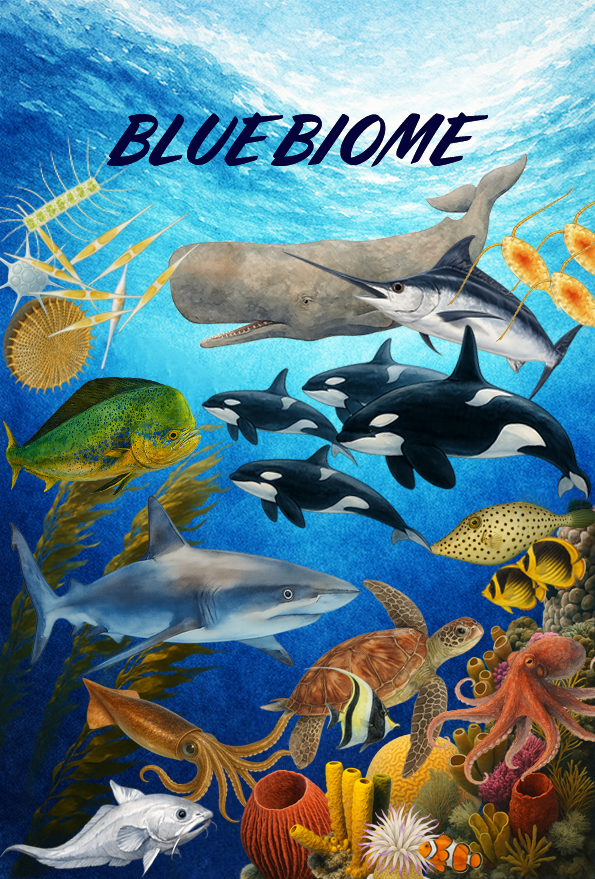
Prototype
Board Game
A physical ecosystem-building game connecting ecological interactions, environmental conditions, threats and opportunities.
Explore resource: Board GameScience. Play. A growing journey.
From an idea to an ocean literacy ecosystem
Blue Biome is a young, independent non-profit initiative connecting marine science, ocean literacy and play. Physical prototypes, connected catalogues, interactive maps and multimedia now form a growing learning ecosystem.
Explore our journey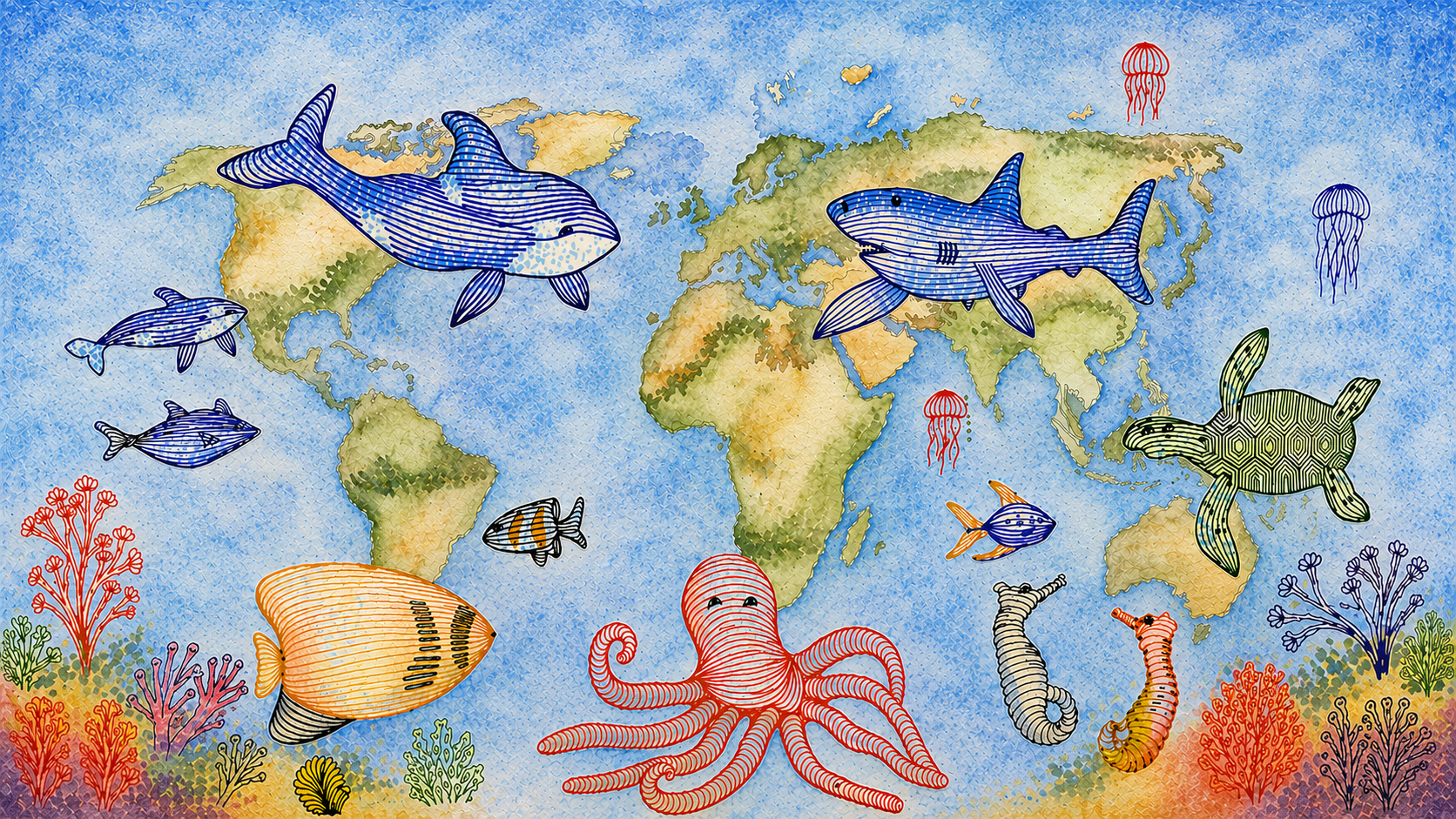
Resources developed and made available so far.
Growing continuously. Blue Biome evolves as new species, ecosystems, learning resources and collaborations are added.
These figures describe our resource inventory and development activity.
Language options include automated translations under editorial review. Read about translation and review
Counts come from the website resource catalogues. Species repeated across ecoregions count once; catalogue entries are not a physical card inventory.
Different ways into the same connected ocean.
A physical ecosystem-building game connecting ecological interactions, environmental conditions, threats and opportunities.
Explore resource: Board Game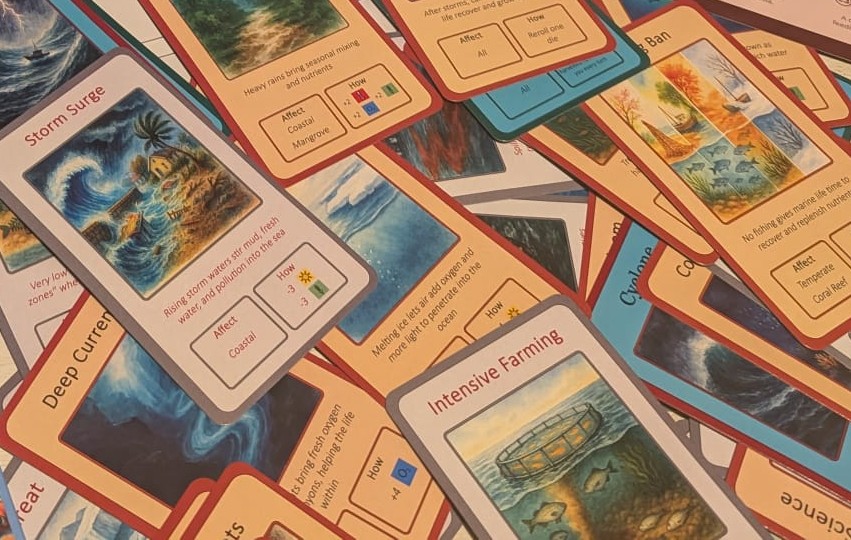
Species, ecoregions and environmental cards connect physical play with digital learning resources through QR codes.
Explore resource: Species & Card Catalogue
Maps for exploring marine ecosystems, species distributions, oceanographic information and environmental processes.
Explore resource: Interactive WebGIS
Explore relationships between species, ecosystems and other Blue Biome concepts. Ecological connections come from curated Blue Biome information; automated processing helps organise the graph.
Explore resource: Knowledge Graph
Videos and visual storytelling bring marine species, ecosystems, environmental processes and gameplay into focus.
Explore resource: Multimedia Learning
Educational scenario pilots connect real marine case studies with exploration and simulation. They are learning tools with stated assumptions and limitations.
Explore resource: Scenario LabFrom the first mockup to connected tools and public testing.
The first mockup brought the board, cards and core components together.
Blue Biome was approved as a non-profit association in Norway.
bluebiome.net became the digital home of Blue Biome.
The first physical board game prototype was in our hands.
Prototype one was tested at Bergen board game club.
WebGIS, the Knowledge Graph and the card catalogue launched together.
The Blue Biome solo game became available in the browser.
The first educational Digital Twins introduced scenario-based exploration of marine case studies.
The second physical board game prototype was in our hands.
The Kickstarter pre-campaign began ahead of board game production.
Blue Biome was presented and tested with marine scientists and science communication specialists in Bergen.
The first multilingual support was implemented across digital resources.
Blue Biome was presented in the EU4Ocean context at the CMA Black Sea Stakeholders Conference.
The Blue Biome memory cards game launched online.
The association statutes were created.
Work began on the first Blue Biome book.
A dedicated domain was established for the initiative.
An EU trade mark application was submitted.
The Blue Biome Facebook group launched.
The Blue Biome YouTube channel launched.
The Blue Biome Instagram account launched.
The application was published for opposition.
Blue Biome launched its Flickr presence.
The association bank account became operational.
The Blue Biome LinkedIn account launched.
The Blue Biome TikTok account launched.
Dates follow the milestone record supplied by Blue Biome. A completed milestone may concern a prototype or an activity still developing.
Early playtesting and science communication activities are helping shape the initiative. Wider classroom testing, educator feedback and co-creation are opportunities for the next phase.
Development has progressed without dedicated project funding.
Blue Biome has been self-funded by its co-founders, Cristian Muñoz Mas and Francesca Confente. We have financed the project's development personally.
We welcome schools, partners and funding opportunities that can help us evaluate, improve and develop the initiative.
People, funding and accountabilityDirections we would like to explore with educators, researchers and partners.
Explore the ecosystem, discover the game or start a conversation about learning together.