Step 1: Look at a changing coastline
Use WebGIS or a photograph to identify beaches, cliffs, shelves, reefs, or other features and look for visible evidence of change.
Ocean water, waves, sediments, tectonic activity, sea-level change, and marine organisms continually reshape Earth. They build, break down, move, and preserve materials that become coastlines, landforms, reefs, and rocks.
Where ocean meets land, constructive and destructive processes continually reshape the coast.
Rocks are broken down by physical, chemical, and biological weathering. Waves, currents, wind, rivers, storms, and gravity then erode, transport, and deposit sediments, changing beaches, cliffs, and other coastal landforms. Sand can contain fragments of rocks, minerals, and organisms, and is continually redistributed by rivers, waves, and currents.
Strong waves and storms can remove large amounts of sediment, while gentler conditions can return sediment to beaches. Beach shape therefore changes over seasons as well as over longer periods.
Climate and movements of Earth’s crust change the position and form of coastlines over both short and geologic timescales.
Climate and tectonic activity can change sea level relative to the land. As relative sea level rises or falls, continental shelves, islands, beaches, marine terraces, and inland seas can appear, disappear, or change shape.
Where tectonic plates interact, uplift, subduction, volcanoes, earthquakes, and mountain building can reshape coastlines and the seafloor. Tectonic movement can also change sea level relative to the land.
Marine environments form and transform rocks, while marine life leaves long-lasting records in reefs, sediments, and the rocks later exposed on land.
Sediments deposited on the seafloor can become sedimentary rock. Volcanoes, hot spots, mid-ocean ridges, and subduction zones also form igneous and metamorphic rocks in ocean settings. Plate movement can later expose these rocks on land.
Many marine organisms make hard structures from calcium carbonate or silica. Shells, coral skeletons, microscopic plankton remains, and other biological material can accumulate on the seafloor and eventually contribute to reefs, sedimentary rocks, and a record of past life.
Use WebGIS or a photograph to identify beaches, cliffs, shelves, reefs, or other features and look for visible evidence of change.
Ask whether waves, storms, weathering, erosion, deposition, sea-level change, tectonics, or living organisms are shaping the feature.
Ask whether each process is building, breaking down, moving, or preserving Earth materials.
This principle helps students understand that the ocean helps shape the planet itself. Coasts, sediments, shelves, reefs, and many rocks on land are connected to marine processes and life in the ocean.
Students often think of the ocean as water next to land. This principle helps them see that the ocean is also part of how Earth’s surface is built, worn away, changed, and rebuilt over time. That makes later topics easier to teach, including coasts, erosion, sea-level change, tectonics, reefs, sediments, and the long-term role of marine life in shaping Earth.
Classroom prompt: Choose one coastal or marine feature on this page. How might waves, sediments, sea-level change, tectonics, or marine life have helped shape it?
Compare reefs, coasts, shelves, and tectonically active marine regions to see how ocean processes shape Earth.
Trace links among marine life, sediments, coastal change, tectonics, and other Earth-shaping processes.
Use cards to discuss thermal vents, storm surge, and other examples where ocean and Earth systems interact.
Tool
Use WebGIS with a coast or erosion photograph to identify beaches, cliffs, shelves, and other landforms shaped where ocean meets land.
Ecoregion
The Red Sea helps students see how tectonic activity, coastlines, and marine processes work together to shape Earth features.
Ecoregion
Use the Great Barrier Reef to show that marine organisms can build large physical structures that become part of Earth’s surface.
Opportunity
Thermal vents show that the ocean is connected to geological processes below the seafloor as well as to life above it.
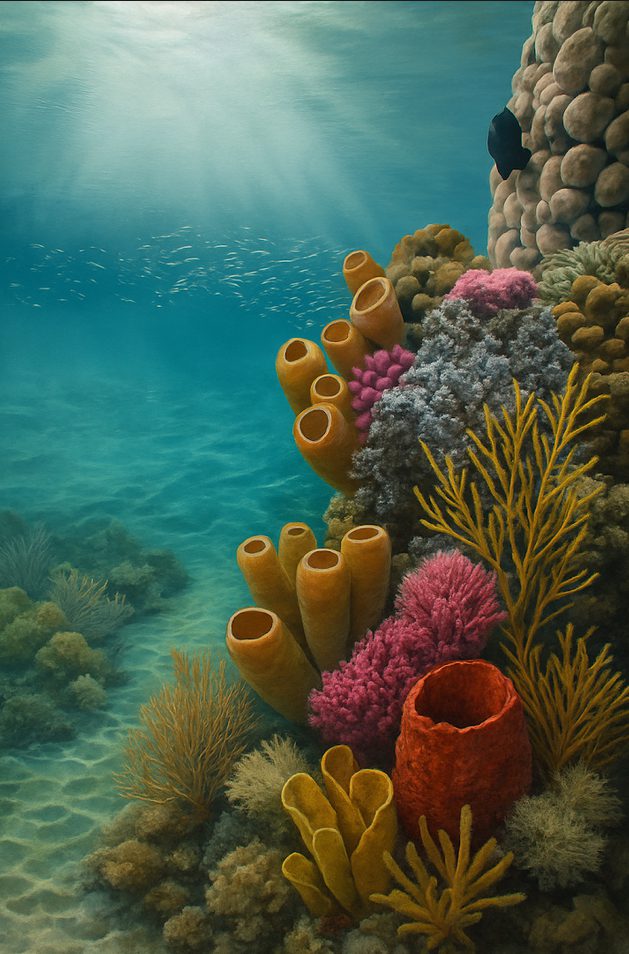
Ecoregion
Distinctive: This region reflects a coastline shaped by tectonic activity, basin structure, and marine conditions.
Connected to the global system: It shows how tectonics, sea level, and the ocean work together to shape Earth features.
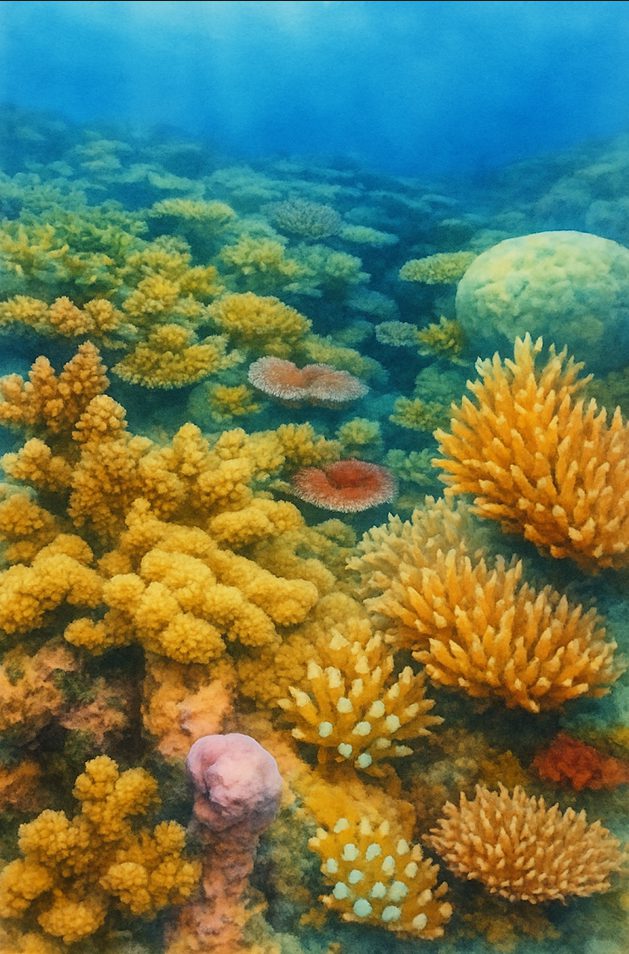
Ecoregion
Distinctive: This reef is a large biological structure built by marine organisms over long periods of time.
Connected to the global system: It shows that ocean life can become part of Earth’s physical surface by shaping habitat, rock, and coastal structure.
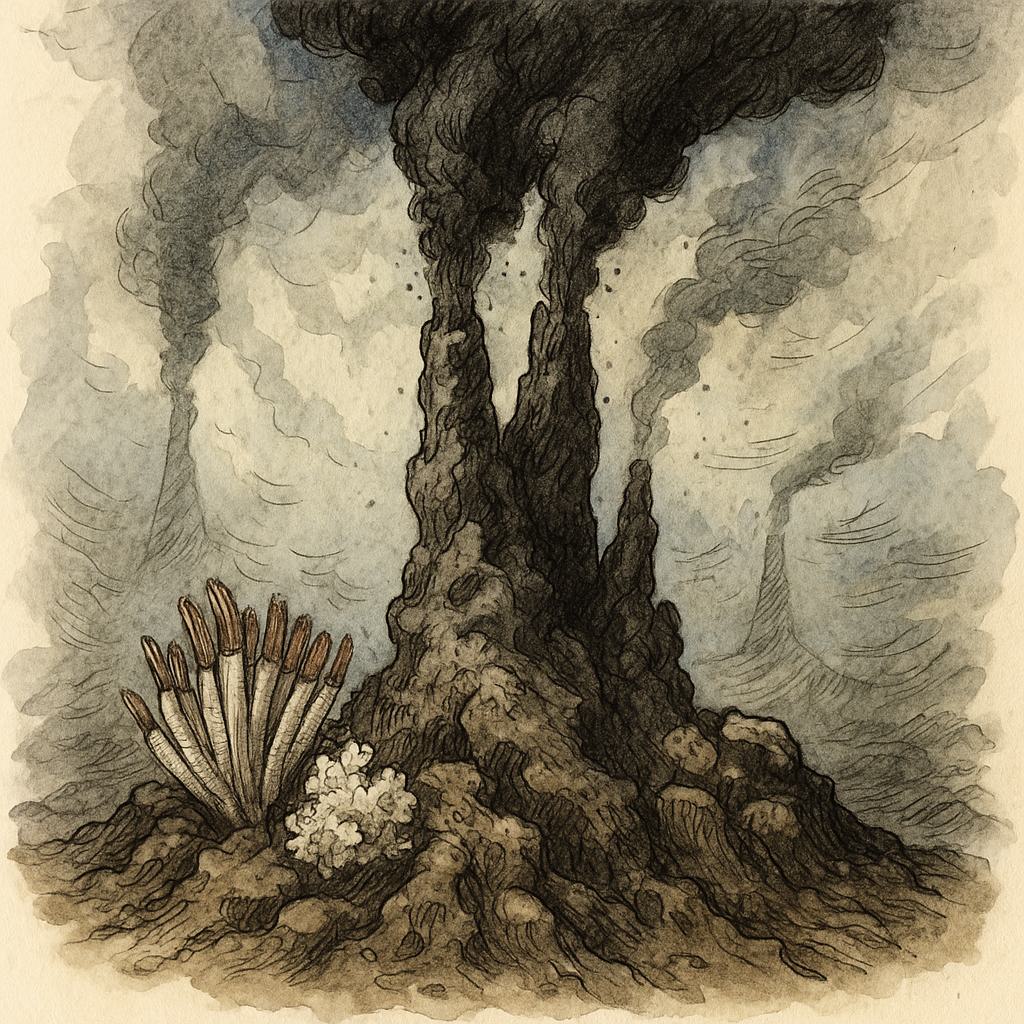
Opportunity
Thermal vents illustrate the principle by showing that the ocean connects directly to geological processes below the seafloor.