Ostracods
Ostracods
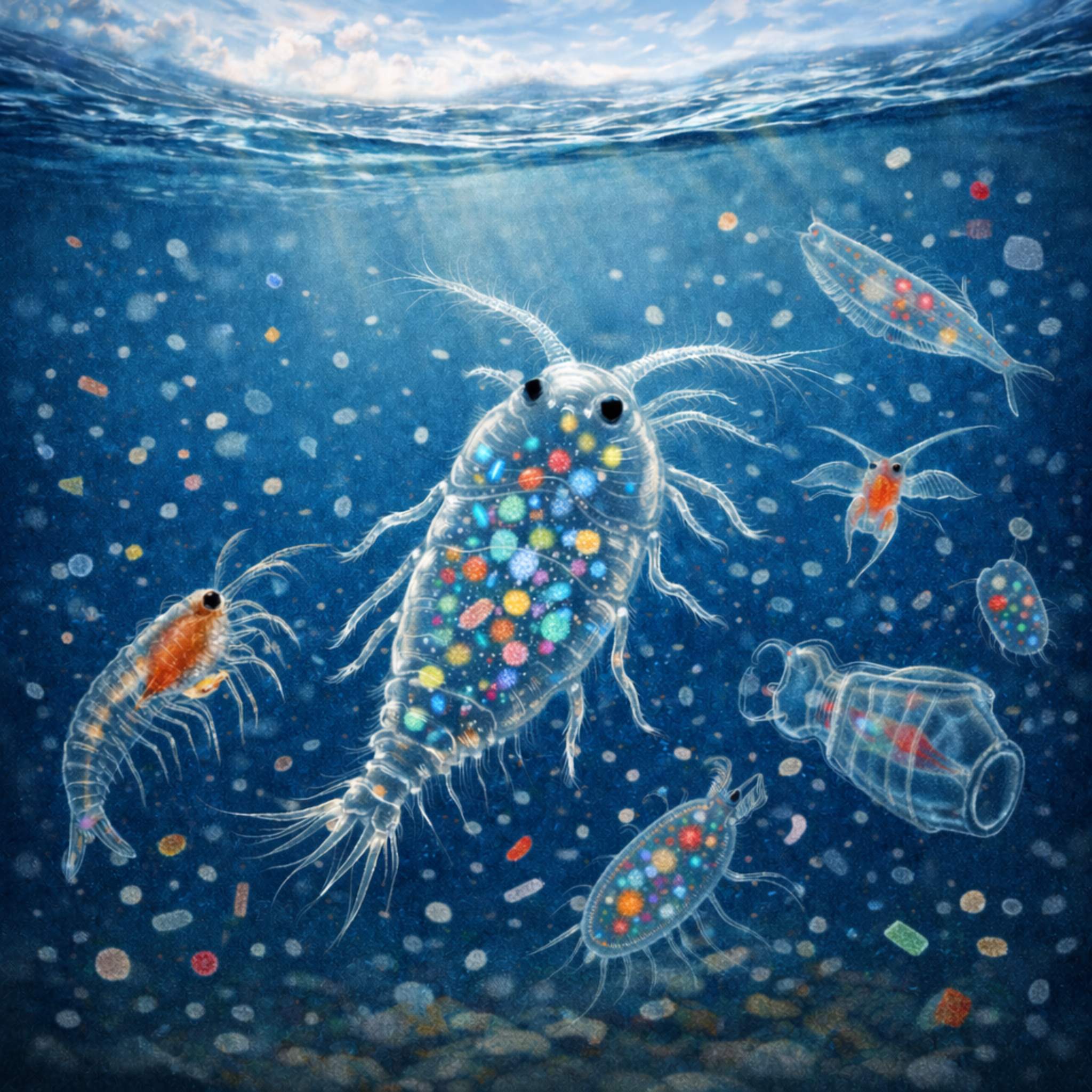
Ostracods are tiny crustaceans that usually measure between 0.2 and 5 millimeters in length. Their bodies are enclosed inside a hard shell made of two hinged halves, making them look like tiny clams, even though they are more closely related to crabs and shrimp. They live in nearly every aquatic habitat, where they swim, crawl, or burrow while feeding on algae, organic matter, or other microscopic organisms.
Video
About this species
Species identity
Ostracods are tiny crustaceans that usually measure between 0.2 and 5 millimeters in length. Their bodies are enclosed inside a hard shell made of two hinged halves, making them look like tiny clams, even though they are more closely related to crabs and shrimp. They live in nearly every aquatic habitat, where they swim, crawl, or burrow while feeding on algae, organic matter, or other microscopic organisms.
Where it lives
They are found in oceans, lakes, rivers, and even temporary pools on every continent. Marine species occur from shallow coastal waters to the deepest parts of the ocean, living on the seafloor, among sediments, or drifting in the water column. They thrive in a wide range of environments, from tropical seas to polar waters.
Role in the ecosystem
Ostracods feed on algae, bacteria, organic matter, and other tiny organisms, helping recycle nutrients in aquatic ecosystems. They are an important food source for fish, crustaceans, and many other marine animals. By transferring energy from microscopic life to larger predators, ostracods help support healthy ocean food webs.
Scientific reference
Citation
Ocean Literacy Connections
This resource can be explored through Ocean biodiversity.
- How do different ocean conditions create different ecosystems and ways of life?
Explore and connect
Open the primary consumer view and compare this species with related marine life.
FAQ
Can some ostracods glow in the dark?
Yes! Some marine ostracods produce blue light in a process called bioluminescence. They use these flashes to attract mates or confuse predators.
Why do ostracods look like tiny clams?
Their bodies are protected by a hard shell made of two hinged halves, called a carapace. Even though they look like tiny clams, ostracods are actually crustaceans related to crabs, shrimp, and lobsters.