Species
1. Meet an oxygen-producing cyanobacterium
Use Prochlorococcus to discuss how tiny ocean organisms carry out photosynthesis and contribute to oxygen production.
Life in the ocean transformed Earth’s atmosphere by producing oxygen, and the earliest evidence of life comes from ancient marine environments. Life on Earth today is connected to these ocean origins.
NMEA grade band: Grades 6–8
Other grade bands are in preparation.
Students should come away understanding that ocean cyanobacteria helped oxygenate Earth, some of the earliest evidence of life comes from marine environments, and life today is connected to ancient common ancestors.
Tiny photosynthetic organisms in ancient oceans transformed Earth’s ocean and atmosphere. Their oxygen production helped create conditions for more complex life, while ancient marine rocks preserve evidence of life’s deep history.
How could tiny organisms living in ancient oceans change the entire planet?
Early Earth’s atmosphere contained very little free oxygen. Over millions of years, cyanobacteria in the ocean released oxygen through photosynthesis.
Oxygen accumulated first in the ocean and later in the atmosphere. This helped form a protective ozone layer and created conditions in which more complex life could survive.
Ozone absorbs much of the Sun’s harmful ultraviolet radiation before it reaches Earth’s surface. Oxygen availability and this UV protection helped make terrestrial environments habitable for more complex organisms. The transition to life on land involved many lineages over time, not a single date.
Photosynthetic organisms use carbon dioxide and release oxygen. Ocean organisms, including cyanobacteria and phytoplankton, continue to produce a large share of the oxygen generated on Earth.
Photosynthesis releases oxygen, while respiration and decomposition consume it.
Some of the oldest evidence of life is preserved in rocks and sediments formed in ancient marine environments. Cyanobacteria are among the oldest known groups represented in the fossil record.
Stromatolites preserve evidence of microbial communities that lived in shallow seas billions of years ago.
Fossils in rocks of different ages provide evidence of evolutionary change and the ocean’s role in life’s history.
The millions of species living today are related through evolution and common ancestry. Many important stages in the early history of life occurred in the ocean.
One clue survives inside plants: chloroplasts, the structures that carry out photosynthesis, have an evolutionary history linked to ancient cyanobacteria.
In chloroplasts, photosynthesis uses light energy to make sugars from carbon dioxide and water. Common ancestry connects past and present organisms, and evolution continues in populations today.
Connected concepts in other principles
Species
Use Prochlorococcus to discuss how tiny ocean organisms carry out photosynthesis and contribute to oxygen production.
Opportunity
Use Phyto Bloom to connect sunlight and ocean photosynthesis with oxygen production today.
Tool
After examining the ancient-life evidence above, use the Knowledge Graph to connect cyanobacteria, photosynthesis, oxygen, evolution, and modern life.
Find Prochlorococcus, Synechococcus, and other photosynthetic organisms to compare where oxygen-producing ocean life is found today.
Trace connections among cyanobacteria, photosynthesis, oxygen production, evolution, and life today.
Use Phyto Bloom to connect sunlight and ocean photosynthesis with oxygen production today.
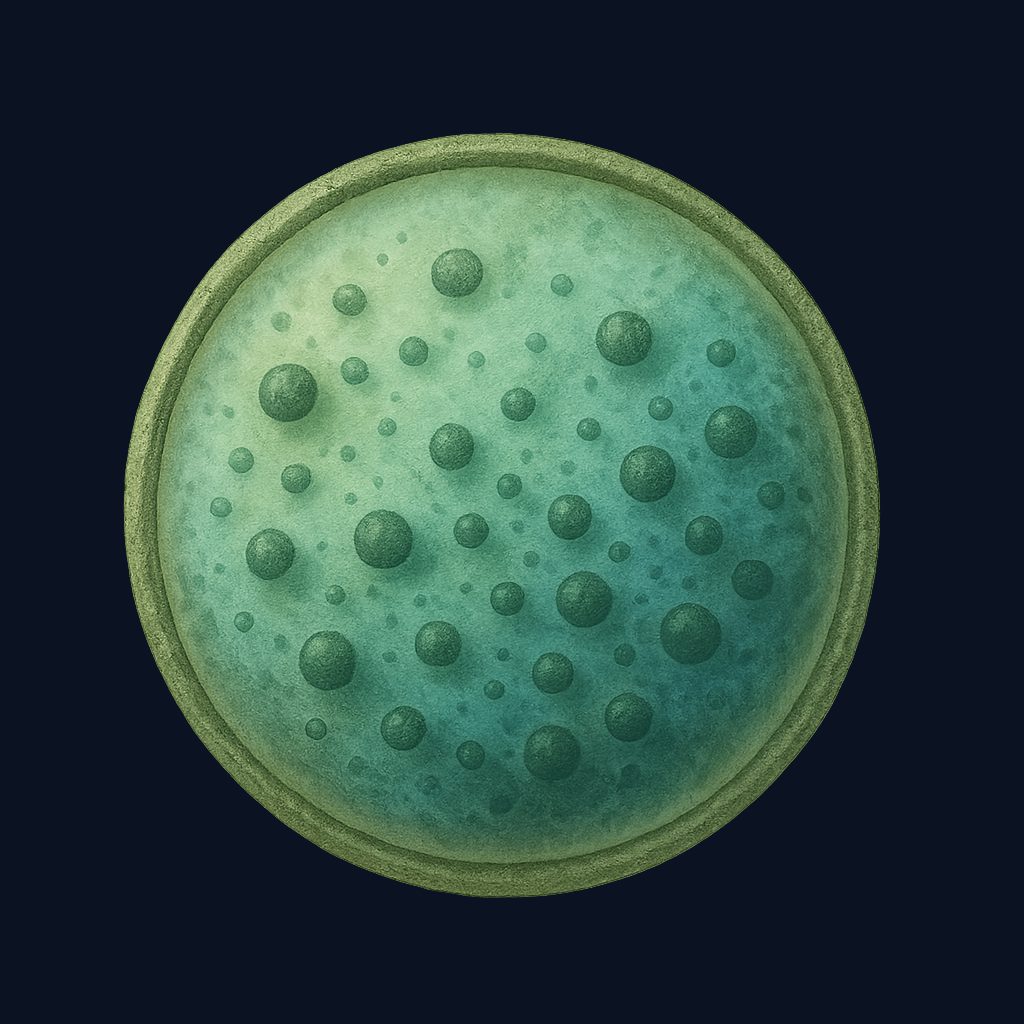
Species
Prochlorococcus helps explain this principle because ocean photosynthetic microbes contribute to oxygen production and primary productivity.
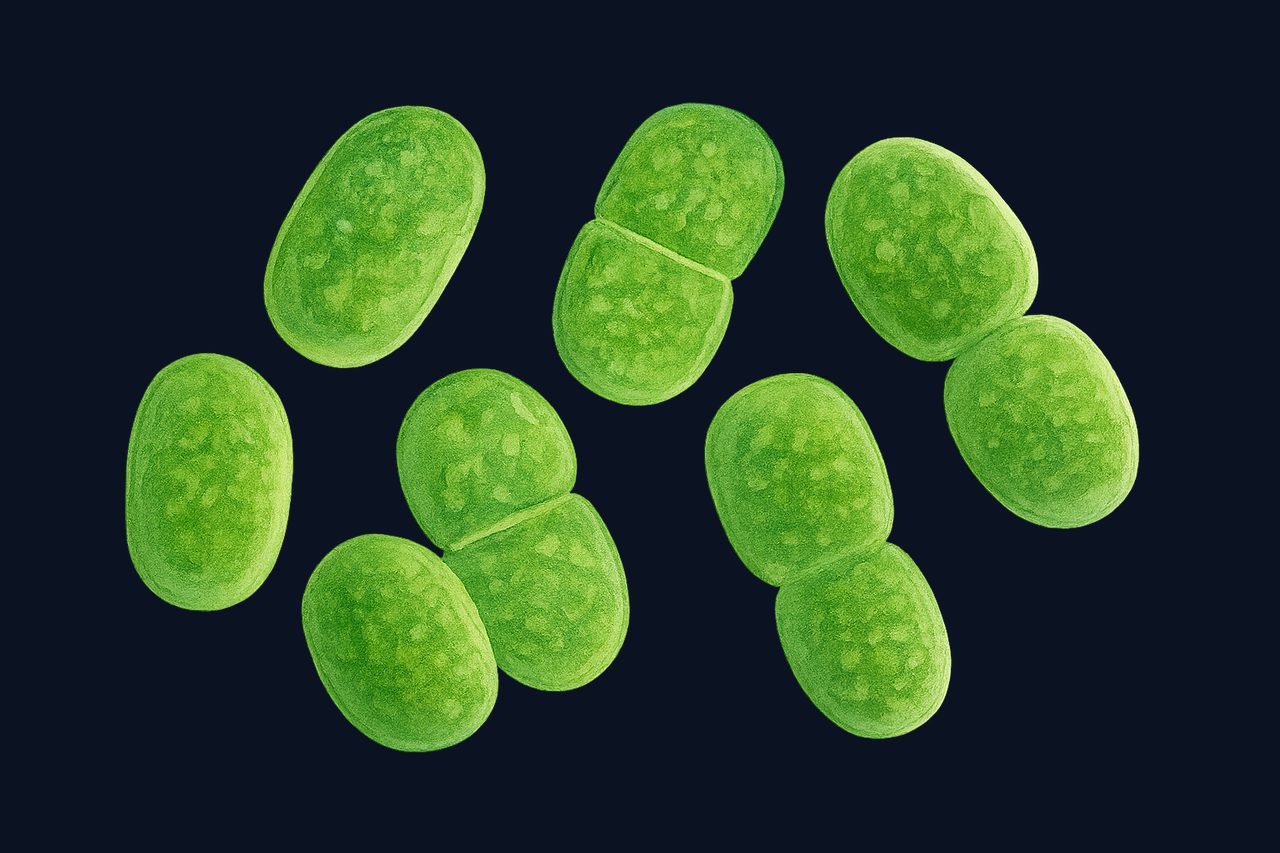
Species
Synechococcus shows that microscopic ocean life can play a major role in producing biomass and supporting habitable planetary conditions.
Opportunity
Phyto Bloom illustrates the principle by showing how ocean photosynthesis supports productivity and oxygen-generating life.
Adapted from the NMEA Grades 6–8 Principle 4 CFD (2021, handbook page 51). Source notes distinguish the original concepts from qualified adaptations. Classroom tasks and platform links are Blue Biome teaching suggestions.
The notes below paraphrase the English NMEA source. They also explain qualified adaptations and corrected references.
Distinguish oxygen production from net accumulation and fossil evidence from a proven birthplace. Explain terrestrial habitability and chloroplast ancestry without treating the simplified ages or all-land-life statements as established boundaries.
Read the explanationDistinguish oxygen production from net accumulation and fossil evidence from a proven birthplace. Explain terrestrial habitability and chloroplast ancestry without treating the simplified ages or all-land-life statements as established boundaries.
Read the explanationDistinguish oxygen production from net accumulation and fossil evidence from a proven birthplace. Explain terrestrial habitability and chloroplast ancestry without treating the simplified ages or all-land-life statements as established boundaries.
Read the explanationDistinguish oxygen production from net accumulation and fossil evidence from a proven birthplace. Explain terrestrial habitability and chloroplast ancestry without treating the simplified ages or all-land-life statements as established boundaries.
Read the explanationDistinguish oxygen production from net accumulation and fossil evidence from a proven birthplace. Explain terrestrial habitability and chloroplast ancestry without treating the simplified ages or all-land-life statements as established boundaries.
Read the explanationDistinguish oxygen production from net accumulation and fossil evidence from a proven birthplace. Explain terrestrial habitability and chloroplast ancestry without treating the simplified ages or all-land-life statements as established boundaries.
Read the explanationOcean oxygenation, ozone and terrestrial habitability
Oxygen production and consumption
Marine fossils, chloroplasts and common ancestry