Fiddler crab
Uca spp
Uca species, known as fiddler crabs, are small coastal crabs that usually grow to about 2–5 cm across. They live on muddy or sandy shores, often in mangroves and tidal flats. Males have one very large claw, which they wave to communicate and attract mates.
Video
About this species
Species identity
Uca species, known as fiddler crabs, are small coastal crabs that usually grow to about 2–5 cm across. They live on muddy or sandy shores, often in mangroves and tidal flats. Males have one very large claw, which they wave to communicate and attract mates.
Where it lives
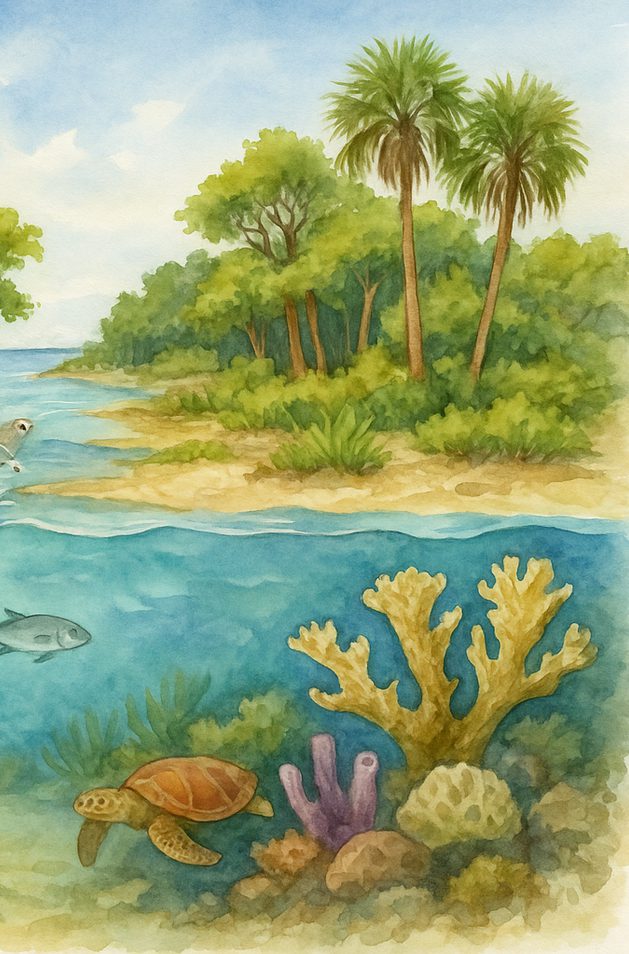
Uca species are found in warm and temperate coastal regions around the world. They are common in shallow areas like estuaries, mudflats, and mangrove forests.
They live in burrows in the sand or mud, which they dig themselves.
These crabs are most active during low tide, when they come out to feed on the surface.
Role in the ecosystem
It feeds on organic material and tiny particles in the sediment. They are eaten by birds, fish, and other animals, linking life on land and in the sea. By digging and moving sediment, they help mix nutrients and keep coastal ecosystems healthy.
Scientific reference
Ocean Literacy Connections
This resource can be explored through Ocean biodiversity.
- How do different ocean conditions create different ecosystems and ways of life?
Explore and connect
Open the primary consumer view and compare this species with related marine life.




FAQ
Why do fiddler crabs have one big claw?
Male fiddler crabs use their large claw to wave at females and to signal to other males, helping them compete and communicate.
Why do fiddler crabs dig burrows?
They dig burrows for shelter from predators, to stay moist, and to protect themselves from heat and drying out during low tide.