American crocodile
Crocodylus acutus
The American crocodile is a large reptile that can grow up to about 3–5 meters long. It has a long, narrow snout and a strong body that helps it swim and catch prey. This crocodile possesses special salt glands on his tongue that excrete excess salt, allowing this species to live and drink in brackish or saltwater environments.
Video
About this species
Species identity
Large reptile that can grow up to 6 meters. It can live in saltwater as well as inland water environments.
Where it lives
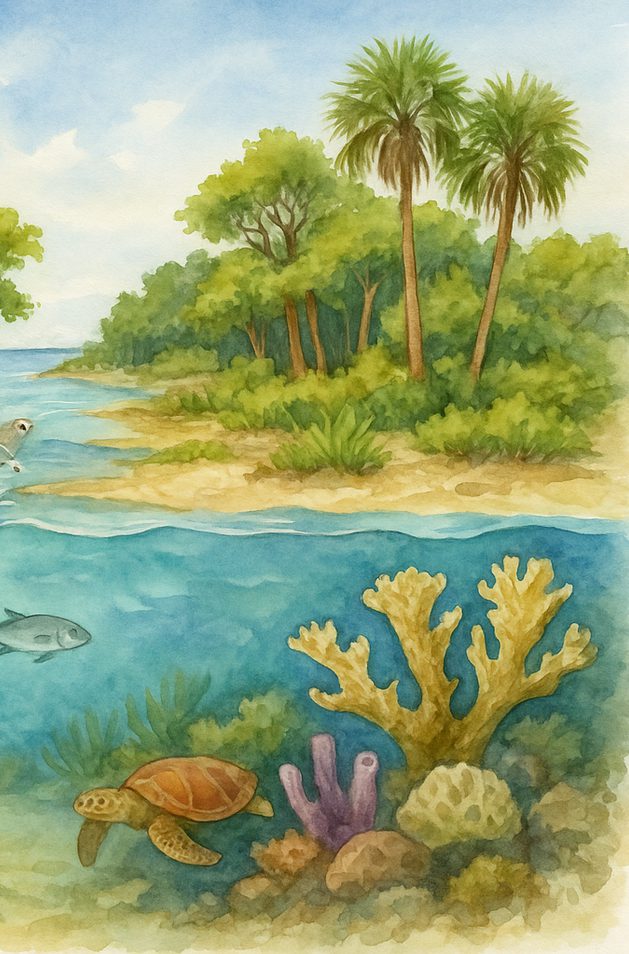
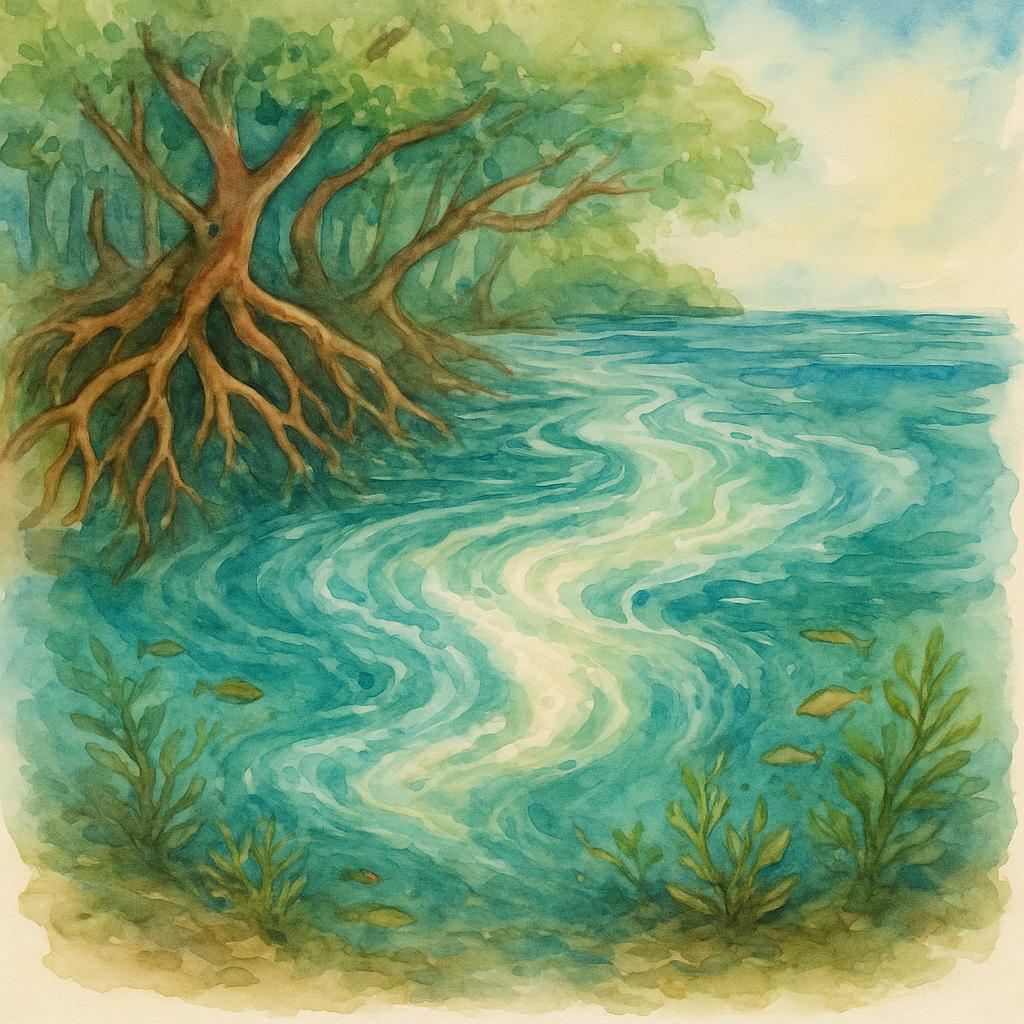
Crocodylus acutus is found in warm regions of the Americas, including southern Florida, the Caribbean, Central America, and northern South America. It lives in places like mangroves, estuaries, coastal lagoons, and rivers.
It prefers areas where fresh and salt water mix.
This species often rests on land but spends much of its time in the water.
Role in the ecosystem
This is a predator that eats fish, birds, and other animals. It helps control animal populations and keeps ecosystems balanced. As a top predator, it plays an important role in maintaining healthy coastal and wetland environments.
Scientific reference
Ocean Literacy Connections
This resource can be explored through Ocean biodiversity.
- How do different ocean conditions create different ecosystems and ways of life?
Explore and connect
Open the tertiary consumer view and compare this species with related marine life.
FAQ
Are American crocodiles dangerous to humans?
They can be dangerous and capable of causing fatal attacks, though they are generally shy and they tend to avoid people.
Can American crocodiles live in salt water?
Yes, they can live in both fresh and salt water, which allows them to move between rivers, coasts, and mangroves.